







In the industrial sector, comparisons between CNC machining and 3D printing are common, as if both technologies were competing against each other. However, the reality is very different.
It is not about deciding which technology is better, but rather determining which one is most suitable for each part, material, and production need. In many industrial projects, both technologies not only coexist, but complement each other to deliver the most efficient solution from both a technical and economic perspective.
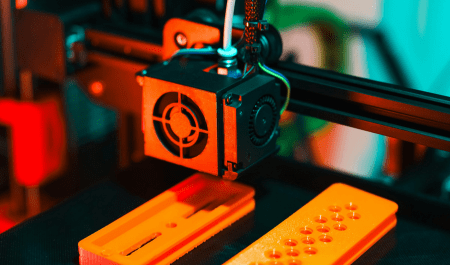
Additive manufacturing has transformed the way industrial components are developed and produced. By building parts layer by layer, it enables the creation of complex geometries that would be difficult or even impossible to manufacture using conventional processes.
3D printing is an excellent choice for:
Additionally, it significantly reduces development times, facilitating quick modifications and agile validations alongside the client.
In certain applications, especially when mechanical demands are moderate and the design adds significant value, 3D printing can also be used to manufacture end-use parts for machinery or industrial equipment.
When a part must operate continuously in a demanding industrial environment, CNC machining remains one of the most reliable and versatile solutions. Manufacturing from solid blocks of material yields components with high dimensional precision, excellent surface finishes, and homogeneous mechanical properties.
CNC machining particularly excels in:
Furthermore, it allows working with a wide variety of engineering plastics such as POM, PA6, HDPE, PET, PTFE, or PEEK, fully retaining their mechanical, chemical, and thermal properties. When component reliability is critical to the operation of a machine or production line, machining is usually the most suitable choice.
The right question is not whether a part should be made via machining or 3D printing. The right question is: What does this application actually need? To answer it, key factors must be evaluated, such as:
Only through this analysis is it possible to select the most appropriate technology.
The True Value: Choosing the Right Solution
In some instances, 3D printing will be the most efficient option. In others, CNC machining will offer greater guarantees. There are even projects where both technologies are used complementarily during different stages of development.
That is why true value does not lie solely in having access to different manufacturing technologies, but in having the technical expertise to choose the right one for each case.
Because in industry, the goal is not to manufacture a part using a specific technology. The goal is for that part to function properly, deliver the expected durability, and maximize the performance of the system.
It is not about deciding which technology is better, but rather determining which one is most suitable for each part, material, and production need. In many industrial projects, both technologies not only coexist, but complement each other to deliver the most efficient solution from both a technical and economic perspective.
3D Printing: Flexibility, Speed, and Design Freedom
Additive manufacturing has transformed the way industrial components are developed and produced. By building parts layer by layer, it enables the creation of complex geometries that would be difficult or even impossible to manufacture using conventional processes.
When is 3D printing particularly interesting?
3D printing is an excellent choice for:
- Functional prototypes.
- Design validation before final production.
- Tooling and auxiliary fixtures.
- Custom parts.
- Short production runs.
- Components with complex or lightweight geometries.
Additionally, it significantly reduces development times, facilitating quick modifications and agile validations alongside the client.
In certain applications, especially when mechanical demands are moderate and the design adds significant value, 3D printing can also be used to manufacture end-use parts for machinery or industrial equipment.
CNC Machining: Precision, Strength, and Maximum Reliability
When a part must operate continuously in a demanding industrial environment, CNC machining remains one of the most reliable and versatile solutions. Manufacturing from solid blocks of material yields components with high dimensional precision, excellent surface finishes, and homogeneous mechanical properties.
When is CNC machining the best option?
CNC machining particularly excels in:
- Parts subjected to high mechanical stress.
- Wear components.
- Guides and sliding elements.
- Protective covers for industrial machinery.
- Components with tight tolerances.
- Medium and large production runs.
Furthermore, it allows working with a wide variety of engineering plastics such as POM, PA6, HDPE, PET, PTFE, or PEEK, fully retaining their mechanical, chemical, and thermal properties. When component reliability is critical to the operation of a machine or production line, machining is usually the most suitable choice.
The Key Isn't the Machine, but the Technical Analysis
The right question is not whether a part should be made via machining or 3D printing. The right question is: What does this application actually need? To answer it, key factors must be evaluated, such as:
- The mechanical loads the part will endure.
- The operating temperature.
- Contact with chemicals or food products.
- Dimensional requirements.
- Expected production volume.
- Required lead times.
Only through this analysis is it possible to select the most appropriate technology.
The True Value: Choosing the Right Solution
In some instances, 3D printing will be the most efficient option. In others, CNC machining will offer greater guarantees. There are even projects where both technologies are used complementarily during different stages of development.
That is why true value does not lie solely in having access to different manufacturing technologies, but in having the technical expertise to choose the right one for each case.
Because in industry, the goal is not to manufacture a part using a specific technology. The goal is for that part to function properly, deliver the expected durability, and maximize the performance of the system.