


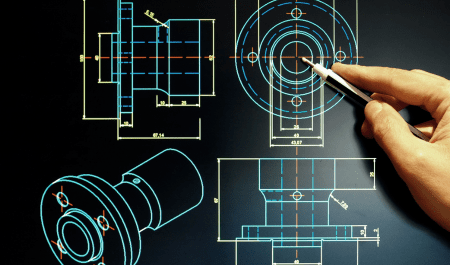
In industrial machinery design, there is a phrase that comes up frequently during the engineering phase: “In theory, this should work perfectly.” And in many cases, it’s true… in theory. The issue arises when that design leaves the CAD screen and enters the reality of the factory floor.
On paper, everything fits: correct tolerances, optimized geometry, and a material defined as “standard engineering plastic.” In the simulation phase, everything performs as expected. But once it hits production, what wasn't in the model happens:
After just a few weeks of operation: premature wear marks appear, friction increases at specific points, minor guiding deviations occur, and the line begins to require constant fine-tuning.
The part “works,” but not reliably.
Instead of simply duplicating the same part, a thorough analysis of the actual operating environment was conducted. The solution wasn't to “make another identical one,” but to rethink: the material, the coefficient of friction, wear resistance, and dimensional stability. The team switched to high-performance engineering polymers (such as UHMW-PE or POM depending on the specific application) and adjusted the contact area design.
Because in industry, an idea can be sound in theory, but it’s only proven when running on an actual production line. That’s where technical experience makes all the difference. It’s not just about manufacturing parts—it’s about understanding how they behave once they get to work.
The case of a slide guide
A machinery manufacturer for the food industry designs a new conveyor line. One of the key components is a slide guide made of engineering plastic, tasked with guiding containers through the process without causing jams or product wear.On paper, everything fits: correct tolerances, optimized geometry, and a material defined as “standard engineering plastic.” In the simulation phase, everything performs as expected. But once it hits production, what wasn't in the model happens:
The real problem: friction, deviations, and constant adjustments.
After just a few weeks of operation: premature wear marks appear, friction increases at specific points, minor guiding deviations occur, and the line begins to require constant fine-tuning.The part “works,” but not reliably.
What hadn't been considered?
The subsequent analysis reveals a common story in the industry: duty cycles much more intensive than expected, presence of moisture and frequent washdowns, continuous dry friction (without lubrication), and an actual load higher than estimated during design. The result isn't a catastrophic breakdown, but something far more dangerous in manufacturing: a progressive drop in performance.
The turning point: redesigning with technical expertise
Instead of simply duplicating the same part, a thorough analysis of the actual operating environment was conducted. The solution wasn't to “make another identical one,” but to rethink: the material, the coefficient of friction, wear resistance, and dimensional stability. The team switched to high-performance engineering polymers (such as UHMW-PE or POM depending on the specific application) and adjusted the contact area design.